
A regular contributor on dream science and symbol interpretation. Keeps a long-running dream journal and follows research in Jungian psychology and the cognitive neuroscience of sleep. Reads more dream research than is healthy.
Dream motifs in cinema: what films get right and wrong
Cinema has been thinking about dreams for as long as cinema has existed. The visual medium and the dream state share a structural similarity — both are sequences of images detached from waking continuity, both can compress or expand time, both can stage events that violate physical possibility — and filmmakers have been exploiting that resemblance since at least Buñuel and Dalí's Un Chien Andalou (1929). The result is a long lineage of films that try to render the experience of dreaming, with very different levels of fidelity to what dreams are actually like. This page is a guide to that lineage from the perspective of someone who reads dream-science literature for fun. We are not going to argue for one canonical "dream film" — that game is rigged by individual taste. We are going to look at which films get something specific right about dreaming, which use dream imagery as a deliberate stylistic choice (without claiming neurological fidelity), and which make recurring mistakes that dream researchers find amusing. A note on what this page is not: it is not a film review section. The films we mention are touchstones for talking about how cinema represents dreams, not endorsements. Several of the films we treat as "neurologically plausible" are not necessarily good films, and several of the films we list as "intentionally surreal" are masterpieces. The two categories track different criteria.
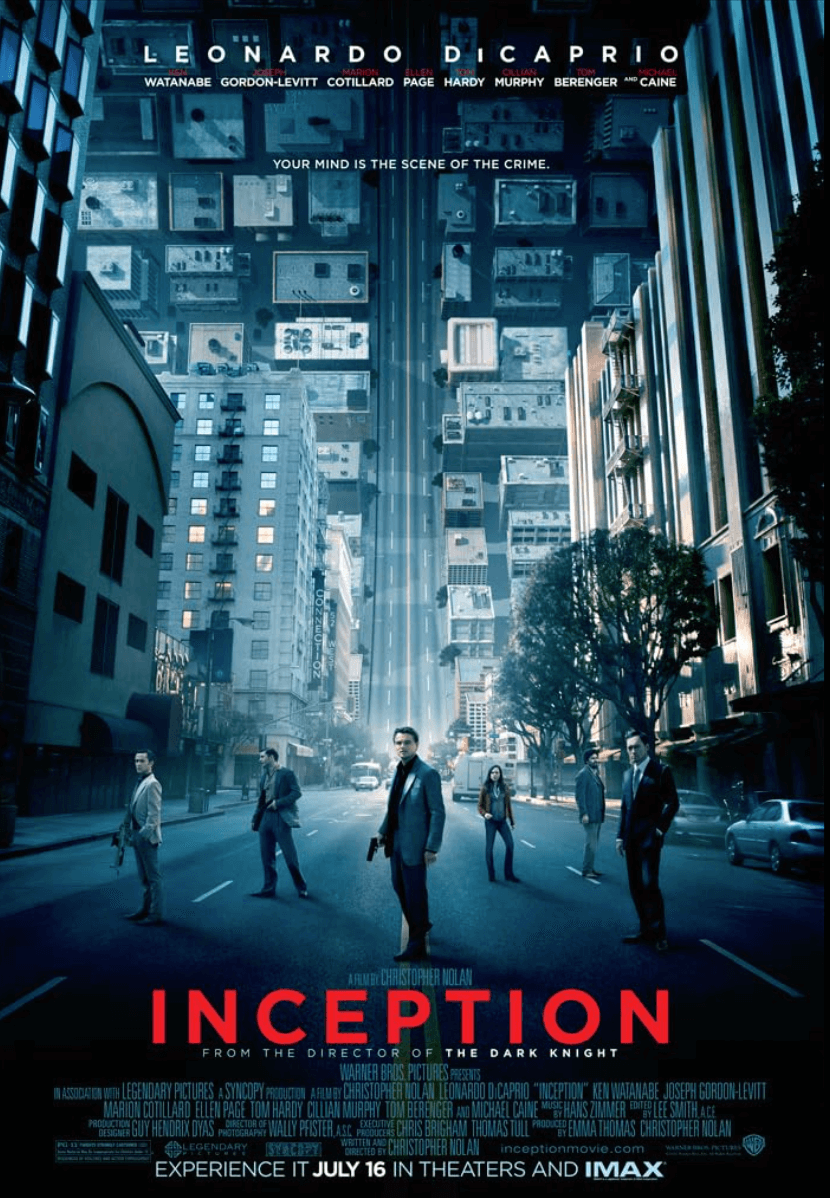
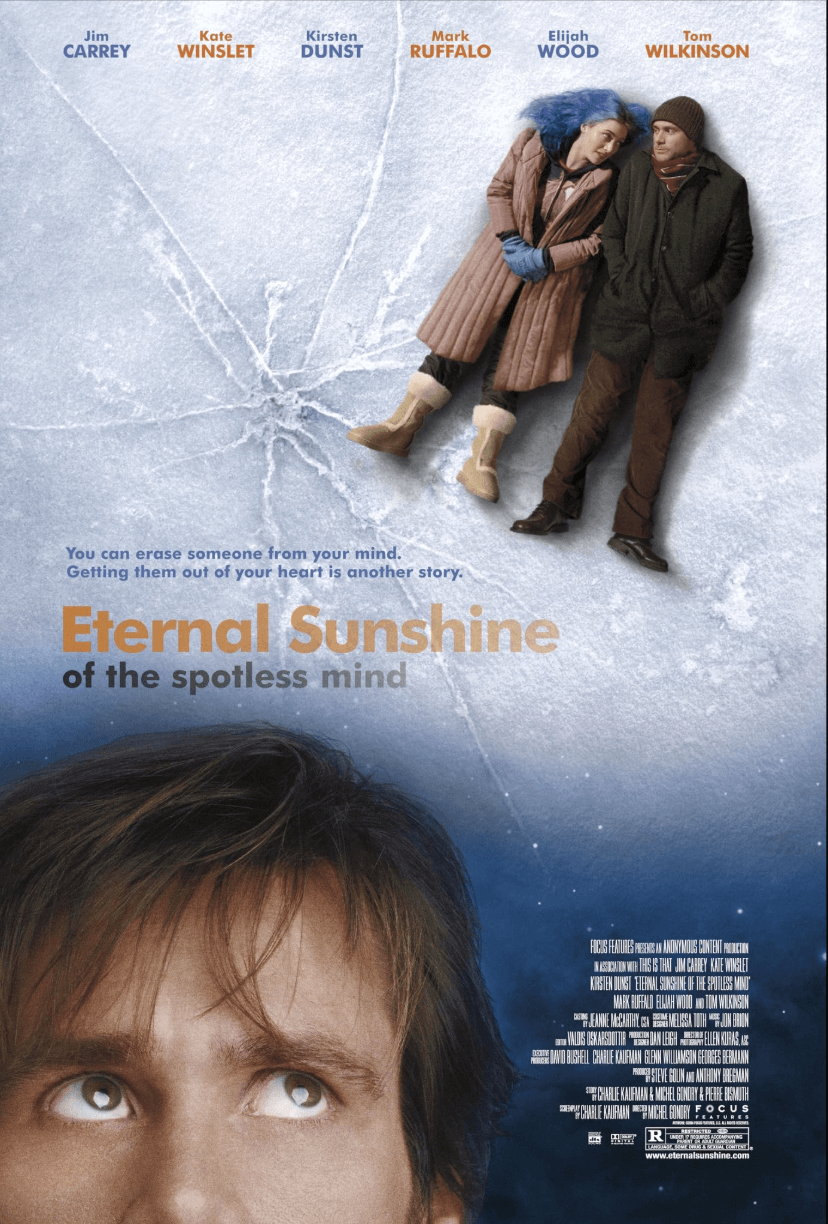
The neurologically plausible category. A small number of films get the basic phenomenology of dreaming roughly right. They feature state shifts that match how dreams transition (sudden, without explanation), they feature emotional intensity disconnected from narrative coherence (dreams care more about how something feels than whether it makes sense), and they feature embodied dream logic (the dreamer accepts impossible premises without resistance, which is exactly how REM sleep mutes the prefrontal "wait, that doesn't make sense" function described in Hobson and Pace-Schott's AIM framework). Christopher Nolan's Inception (2010) gets a surprising amount of this right, despite its rule-bound architecture. Michel Gondry's Eternal Sunshine of the Spotless Mind (2004) gets dream-like memory texture right. David Lynch's Mulholland Drive (2001) is closer to actual dream phenomenology than almost any film that explicitly markets itself as "about dreams."
The intentionally surreal category. Many of the most celebrated dream films are not really trying to render dreams accurately — they are using dream imagery as a deliberate stylistic and metaphorical resource. Buñuel and Dalí's Un Chien Andalou (1929), Federico Fellini's 8½ (1963), Akira Kurosawa's Dreams (1990), Guillermo del Toro's Pan's Labyrinth (2006) — these films use dream-like sequences to express what waking-life realism cannot. They are not neurologically faithful and were not trying to be. Reading them as "what dreams are really like" misses the artistic point.
The recurring mistakes category. Many films get dreams wrong in ways that are interesting to track. The most common: showing dreams as fully visually coherent, with stable lighting, continuity editing, and clear character motivation — when actual dream content is much more fragmentary and emotionally driven. Another common mistake: treating dream symbolism as a fixed code the dreamer has to "crack" — when the dream-research literature consistently shows that dream meaning is highly individualized. A third: depicting lucid dreaming as instantly trainable (it isn't; controlled studies suggest reliable lucid dreaming requires weeks of practice with techniques like LaBerge's MILD).
The most useful frame for a viewer is to watch dream sequences in cinema with two questions in mind: what is the film trying to do with the dream image (express something about the character, advance the plot, create atmosphere), and how closely does this match what dreams actually do for the dreamer (process emotion, rehearse threat, integrate memory, generate novel imagery)? The answers usually diverge — and the divergence is itself often what is interesting about the film.
Quick reference
Films with neurologically plausible dreams
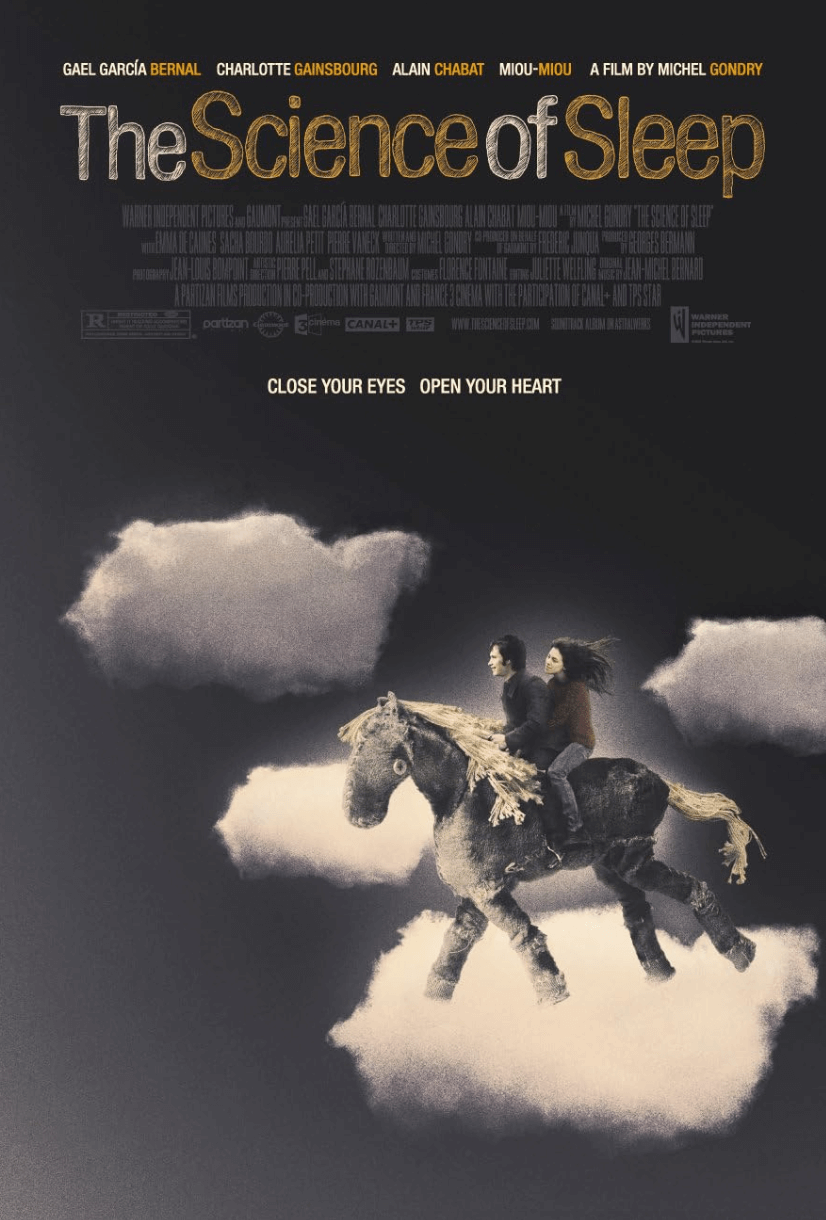
Mulholland Drive (David Lynch, 2001) — closer to actual REM phenomenology than most. Eternal Sunshine of the Spotless Mind (Michel Gondry, 2004) — dream-like memory texture. Inception (Christopher Nolan, 2010) — gets state shifts and embodied logic right. The Science of Sleep (Michel Gondry, 2006) — fragmented dream texture.
Films with intentionally surreal dreams
Un Chien Andalou (Buñuel & Dalí, 1929) — surrealist art film, not phenomenological accuracy. 8½ (Federico Fellini, 1963) — dream as stylistic expression of inner life. Dreams / Yume (Akira Kurosawa, 1990) — eight stylized dream-vignettes. Pan's Labyrinth (Guillermo del Toro, 2006) — fairy-tale logic, not REM logic. Paprika (Satoshi Kon, 2006) — anime exploration of shared dreaming.
Common cinematic mistakes about dreams
Showing dreams as visually coherent when actual dreams are fragmentary. Treating dream symbols as a fixed code the dreamer must "crack". Depicting lucid dreaming as instantly accessible (it requires weeks of practice). Using dreams primarily as exposition vehicles rather than emotional ones. Confusing dream-like and dream — surrealism in cinema is rarely actual REM.
References
- Hobson JA (2009). REM sleep and dreaming: towards a theory of protoconsciousness. Nature Reviews Neuroscience, 10(11), 803–813. Link
- Schredl M (2018). Researching Dreams: The Fundamentals. Palgrave Macmillan. Link
- Bulkeley K (2008). Dreaming in the World's Religions: A Comparative History. NYU Press.
- Pagel JF (2008). The Limits of Dream: A Scientific Exploration of the Mind / Brain Interface. Academic Press.
- Cartwright RD (2010). The Twenty-four Hour Mind: The Role of Sleep and Dreaming in Our Emotional Lives. Oxford University Press.
- LaBerge S (1985). Lucid Dreaming. Jeremy P. Tarcher / St. Martin's Press.
- Hartmann E (2011). The Nature and Functions of Dreaming. Oxford University Press. Link
- Walker M (2017). Why We Sleep: Unlocking the Power of Sleep and Dreams. Scribner.